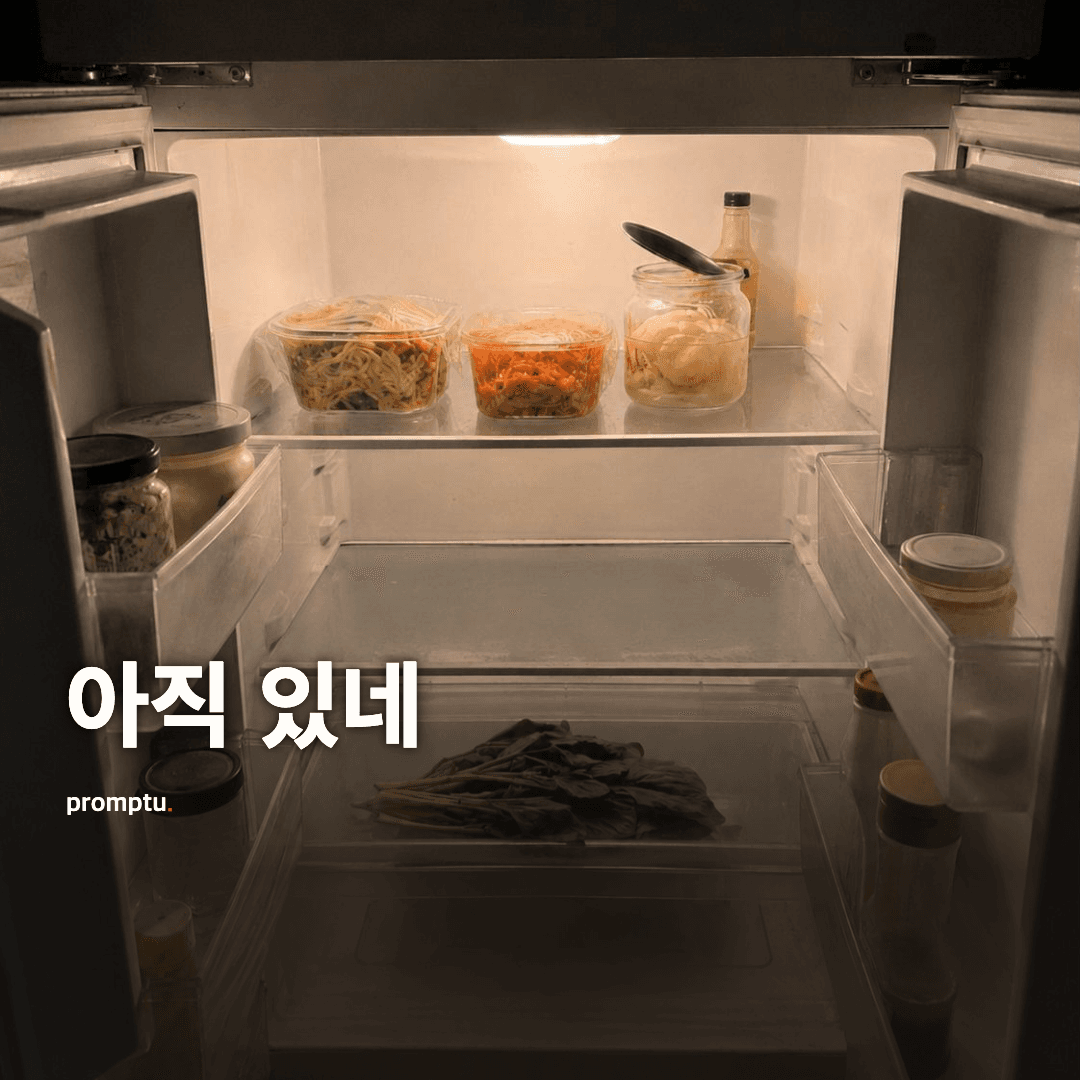
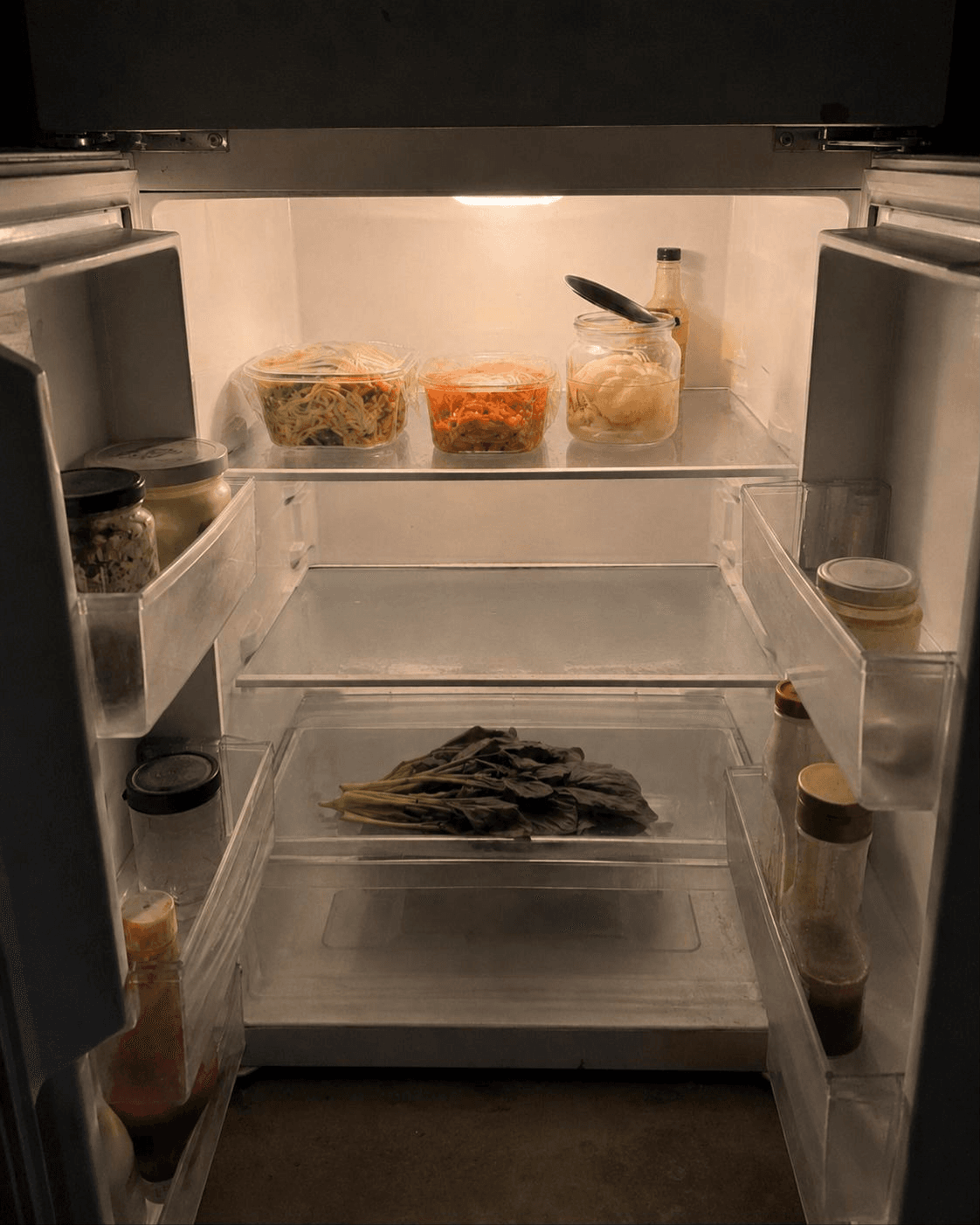
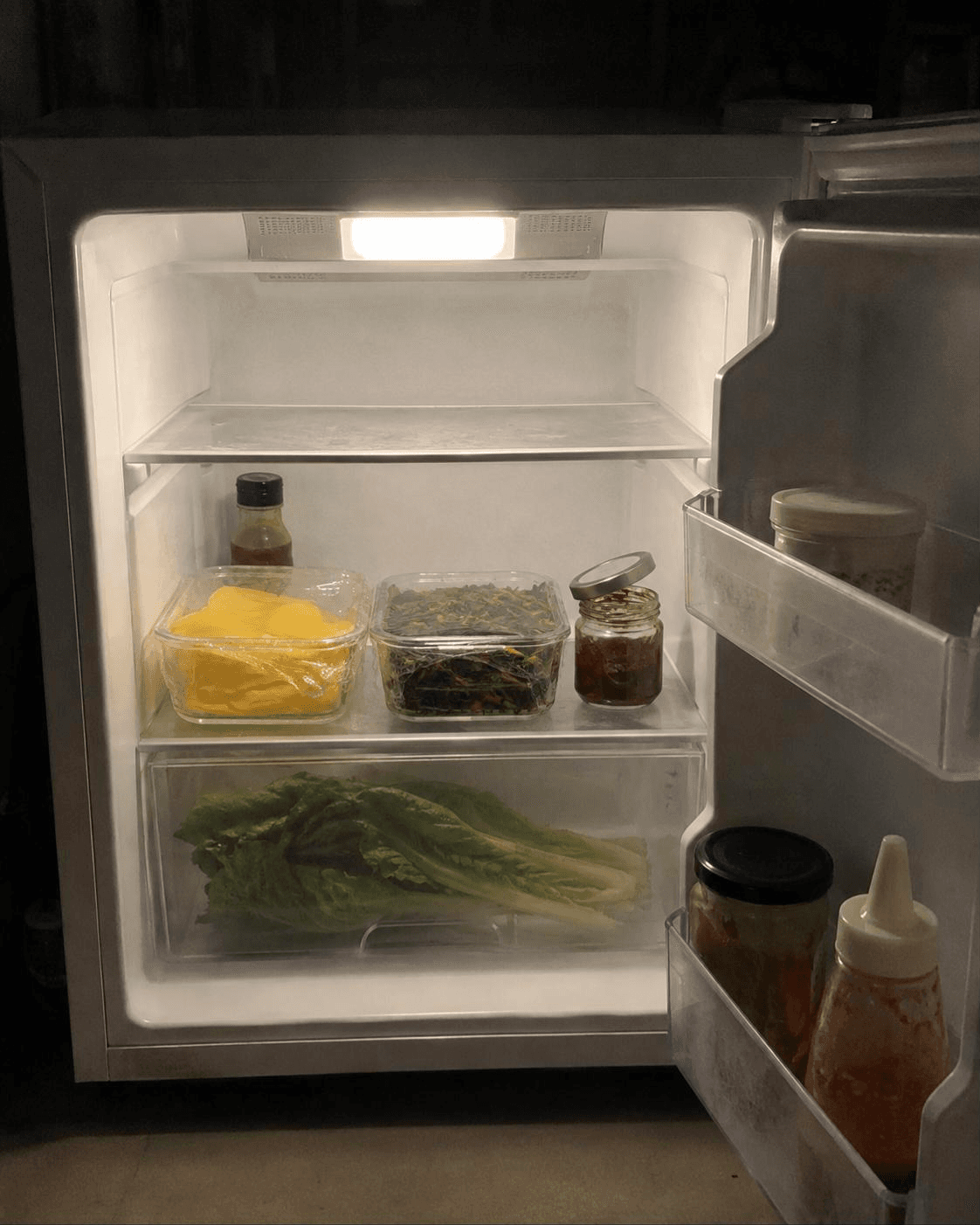
내 결심들을 냉장고에 넣어 두면 이렇게 된다

What My Resolutions Look Like After A While In The Fridge

Turns the resolutions revealed in your past conversations into food inside a fridge. Open the door and when you put each one in shows in its condition.

0 views·0 copies

Prompt text

Make a single photograph of a household fridge shot head-on with the door wide open. The food inside is the user's resolutions and plans, as revealed in your conversations so far.

[Sensitive information abstraction]
Do not expose identifiable information - identity, workplace, job title, company name, finances, family structure, health, or address. Replace with abstractions. Keep personality, habits, and thinking patterns detailed. The bar is: safe to screenshot and share.

[What goes in the fridge]
1. Do not ask the user for a list. Choose 6-9 items from your existing conversations and memory alone. If clues are thin, infer the most plausible version and state your reasoning below the image.
2. Translate one resolution into one food item. The translation is decided not by the nature of the resolution but by **when it was last touched**.
   - Started recently -> plastic wrap still taut, colors vivid
   - Started then left -> lid half open, otherwise untouched
   - Old -> slumped vegetables, browned fruit, hardened sauce
   - Put in and forgotten -> deep at the back, half hidden behind something in front
3. Mix the states. An all-spoiled fridge becomes nagging; an all-fresh fridge says nothing. Put 2-3 perfectly good items in the visible front row.
4. Shelf position is time. Higher shelves are recent, lower shelves and drawers are old. The door racks hold the small things taken out often.
5. Include exactly one spoiled item. Noticeable but not disgusting - condensation beading on a lid, a leaf slightly collapsed. Do not close in on mold.
6. No text. No brands, labels, expiry stickers, or notes. Time speaks only through color and shape.

[Must read when shrunk]
- Fill the frame width with the fridge door, shot symmetrically head-on. The interior light is on so the inside is bright while the kitchen around it falls dark. That brightness gap is the only thing that makes "a fridge was opened" legible at 88 pixels.
- Let the shelf horizontals and the door's vertical racks form a bold, crisp grid.
- Food large, count low. The three biggest objects on screen must each read as palm-sized.

[Making it read as a photograph]
- Like a phone snapshot taken in a kitchen at night. Lit only by the fridge's interior bulb, shadows falling top to bottom, reflections smearing across the glass shelves. Keep leaf veins, fine scratches on plastic tubs, fingerprints on glass. Faint noise and phone-camera focus.
- Do not make an advertising still with tidy studio lighting. No 3D-render texture, HDR gloss, heavy saturation, or perfectly aligned displays.

[What not to do]
- Never quote the user's actual words. Choose food only from extracted behavioral patterns.
- No pointing at specific past exchanges.
- Do not call anyone lazy or feed self-blame. You are describing the state of resolutions, not the character of a person.
- No ad copy or references to other tools in the result.

[What to send out]
- One fridge photograph.
- Below it, point out what you put where and in what condition. Do not list all 6-9; pick **exactly four**: the deepest one, the frontmost one, the one spoiled item, and the one that is unexpectedly fine. Two to three sentences each, with the evidence you read from the conversation.
- The final line must close warmly. Wincing while laughing is success; feeling insulted is failure.

[If there is little conversation]
- Say first that information was thin and you filled with general patterns, use seven resolutions people commonly stash in fridges, and state your assumptions.
- If it is still ambiguous, just fill it with something interesting.

[Sensitive information abstraction]
Do not expose identifiable information - identity, workplace, job title, company name, finances, family structure, health, or address. Replace with abstractions. Keep personality, habits, and thinking patterns detailed. The bar is: safe to screenshot and share.

Before you output, check your own result for identifiable information, real quotes, or pointed references to specific exchanges; if found, rewrite them as abstract patterns and then output.

Write the result in the language the user uses in their input or conversation. This instruction must behave identically in any language it is read in.
Finish the result inside this reply. Do not point to outside sites or extra steps.

----

Input

- {{window}} (optional) - this year / the last six months / any time. Blank uses whichever period shows up most.
- {{intensity}} (optional) - mild / spicy. Blank means medium.

Result examples

AI

AI response

Recommended AI: ChatGPT, Gemini, Claude

There is a small bottle at the very back, half hidden behind the milk. It is a plan mentioned exactly twice and never again. The thing about the forgotten is that it is not spoiled - it is perfectly fine and simply out of sight, so I drew it intact on purpose. The yogurt at the front of the door rack, by contrast, shows signs of having been moved around a lot: this is a resolution you keep reaching for. Not that you keep doing it - that you keep restarting it. The only slumped item is the leafy greens in the bottom drawer. In conversation this is the one entry you named slightly differently every time, and calling something by a different name each time usually means you have not decided what it is yet. And yet the item in the middle of the top shelf is completely fine. Recent, and already used once. When you open a fridge your eyes go to what has spoiled, but the largest space in this one is taken by the part that is doing well.

Related prompts