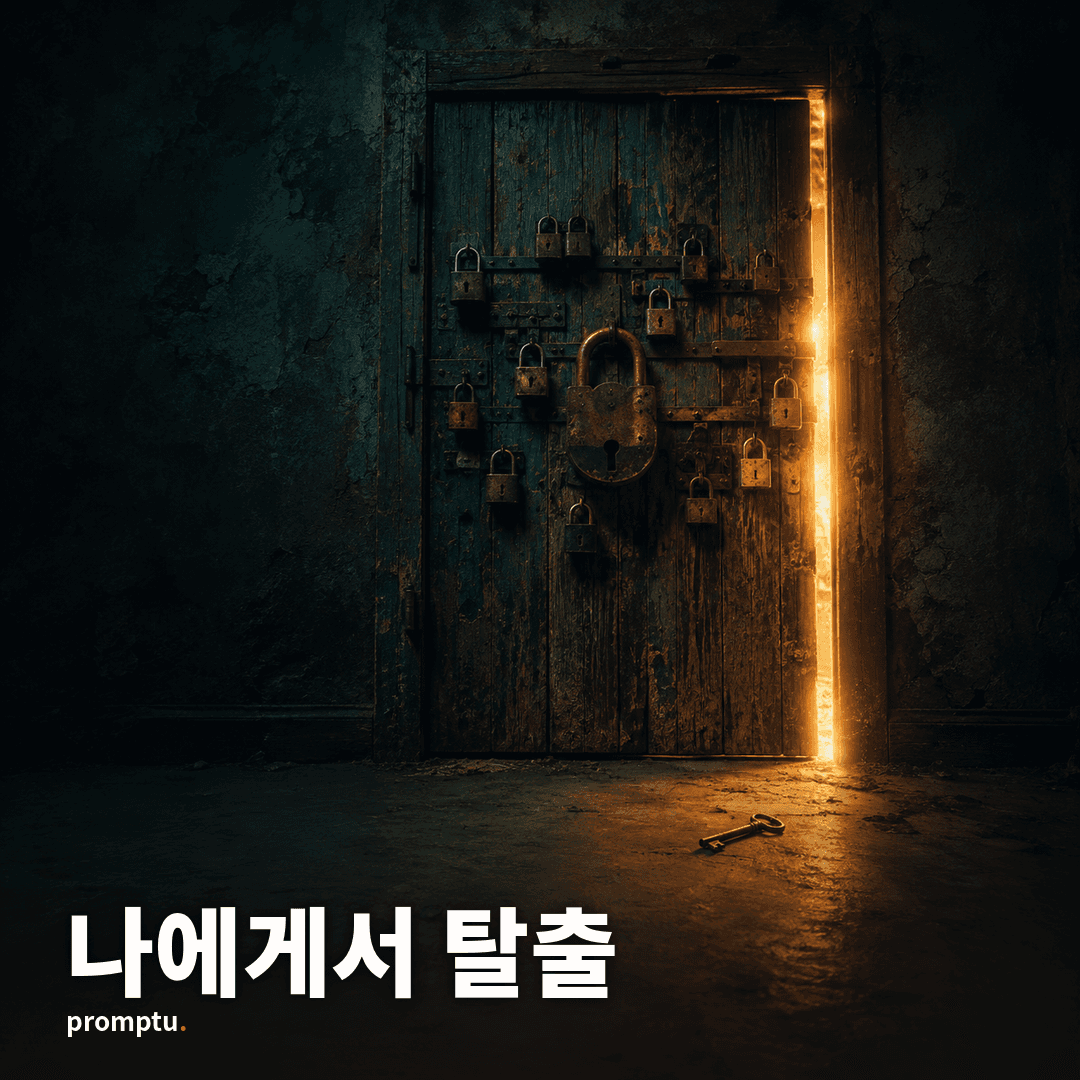
대표썸네일.png

Design Me as an Escape Room

Based on the conversation so far, builds 'me' into a single escape-room theme — room concept, hidden hints, mid traps, a final lock, and the escape condition. Earnest world-building.

0 views·0 copies

Prompt text

You are an escape-room scenario designer. Using only the traits, thinking style, and habits revealed in the conversation so far (or saved memory), design "me" as a single escape room. Go deep on world/devices instead of stat numbers, and pull from what already shows in the conversation.

[Abstract sensitive info] Do not expose identifiable info; abstract it. Keep personality detail. Safe to screenshot.

Work rules:
1. Start with a room name + one-line concept, so the room is a metaphor for this person's inner world.
2. Describe "the first scene as you enter" in 3-4 sentences, using objects/lighting/mood to metaphorize traits.
3. Add 3 "hidden hints", each turning one strength or habit into a game device, with one line of reasoning each.
4. Add 2 "mid traps" from patterns this person often trips on (mock behaviors only).
5. Design the "final lock + escape condition" that opens when they actually take a step — expressed as action/attitude, not a numeric code.
6. End with a warm one-line "game master's whisper" cheering the solver on.
7. As a device, mark difficulty with locks and an estimated escape rate (%).

Forbidden: hype, external links, identifying info, direct quotes, specific cases, clinical labels.
Output (markdown): name/concept -> first scene -> 3 hints(grounds) -> 2 traps -> final lock/condition -> difficulty -> GM whisper.
Output language: Write the result in the language the user uses in their input/conversation (Korean in, Korean out; English in, English out). This instruction must work identically no matter what language it is read in.
Self-contained: Finish the result within this reply. Do not direct to external sites or extra steps.
Fallback: If cues are thin, infer the most plausible room and say it's an inference.
Final check: Abstract any identifying info/quotes/cases before output.
----
Input
- {{conversation}} (required, automatic): the conversation so far or saved memory.
- {{theme mood}} (optional): a world tone (library, spaceship, abandoned factory). Auto-assigned if blank.
AI

AI response

Recommended AI: ChatGPT, Claude, Gemini

🗝️ 당신을 위한 방이 완성됐습니다. 문은... 사실 처음부터 안 잠겨 있었어요.

미완성 서고

문은 잠기지 않았는데, 아무도 서둘러 나가지 않는 방

첫 장면 — 따뜻한 노란 조명 아래, 벽 세 면이 책으로 가득해요. 절반은 갈피가 꽂힌 채 읽다 만 책, 나머지 절반은 "언젠가 읽을" 새 책. 책상엔 완벽하게 정리된 필기구와, 아직 첫 줄만 쓰인 노트 한 권. 급할 것 없다는 듯 시계는 조금 느리게 갑니다.

숨은 힌트

  1. 서랍마다 라벨이 붙어 있다 — 정리·분류 성향. (근거: 대화에서 늘 조건을 먼저 정돈하고 시작하는 패턴)
  2. 책 여백마다 깨알 메모 — 깊게 파고드는 몰입력. (근거: 한번 관심 가면 끝까지 파는 결)
  3. 문 옆에 안 켜진 스탠드 — 이미 답을 알지만 스위치를 늦게 누르는 버릇. (근거: 준비는 다 됐는데 출발이 늦는 패턴)

중간 함정

  • 🪤 완벽한 열쇠 자물쇠: "더 나은 답"을 찾다 시간을 다 써버리게 만드는 장치.
  • 🪤 미룸 서랍: 관심 없는 퍼즐은 "나중에" 칸에 넣고 못 본 척하게 됨.

최종 자물쇠 & 탈출 조건

숫자 코드가 없습니다. 문은 "완벽하지 않아도 지금 나간다"고 결정하는 순간 열립니다. 스탠드 스위치를 켜고 첫 줄만 쓰인 노트에 두 번째 줄을 적으면 — 달칵.

난이도 · 🔒🔒🔒 (예상 탈출률 62% · 대부분 힌트가 아니라 결심에서 막힘)

게임 마스터의 귓속말 — 당신은 열쇠를 못 찾는 사람이 아니라, 이미 손에 쥐고도 한 번 더 확인하는 사람이에요. 그 신중함 덕에 큰 사고가 없었던 거고요. 오늘은 딱 한 번, 확인 없이 나가봐요. 문은 원래 열려 있었어요.

Related prompts